Thursday, April 10, 2014

NATIONAL POLITICAL PARTIES IN INDIA

DETAILS OF NATIONAL POLITICAL PARTIES IN INDIA:

On the eve of General Election 2014 lets have a look on all the National Political Parties in India.

India has a multi-party system with predominance of small regional parties. Political parties that wish to contest local, state or national elections are required to be registered by the Election Commission of India (EC). In order to gain recognition in a state, the party must have had political activity for at least five continuous years, and send at least 4% of the state's quota to the Lok Sabha (India's Lower house), or 3.33% of members to the Legislative Assembly of that state. These conditions are deemed to have failed if a member of the Lok Sabha or the Legislative Assembly of the State becomes a member of that political party after his election. If a party is recognized in four or more states, it is declared as a "National party" by the EC. Otherwise, it is known as a "State Party".
All parties contesting the elections have to choose a symbol from a list of available symbols offered by the EC. All 28 states of the country along with the union territories of Puducherry and the National Capital Territory of Delhi have an elected government unless President's rule is imposed under certain conditions.
This listing is based on the notification by Election Commission of India for the Indian general election, 2014 and Legislative Assembly elections.

Number of political parties:

As on 12 March 2014, following is the count of political parties in India which are registered with the Election Commission of India.

Total  Registered Parties
1616
National Parties
6
State Parties
47
Unrecognized Parties

1563

National Political Parties:
A registered party is recognized as a National Party only if it fulfills any of the following three conditions:
  1. The party wins 2% of seats in the LokSabha (11 seats) from at least 3 different States.
  2. At a General Election to LokSabha or Legislative Assembly, the party polls 6% of votes in four States and in addition it wins 4 LokSabha seats.
  3. A party gets recognition as State Party in four or more States.
Both national and state parties have to fulfill these conditions for all subsequent LokSabha or State elections. Else, they lose their status.

Details of all national political parties:

      1.      Indian National Congress:

Founded          - 28th December 1885 by Allan Octavian Hume.
Head Quarters – 24, Akbar Road, New Delhi.

               President                                                 Flag                                                               Symbol

Sonia Gandhi(www.infodhooth.blogspot.in)


2.Communist Party of India:

Founded          - 26th December 1925 by M.N.Roy.
Head Quarters – New India, India.

Suravaram Sudhakar Reddy(www.infodhooth.blogspot.in)


3.Communist Party of India (Marxist):

Founded          – 1964 by Prakash Karat.
Head Quarters – Gole Market, New Delhi, India.


Prakash Karat(www.infodhooth.blogspot.in)


4.Bharathiya Janata Party:


Founded          – December 1980 by Syama Prasad Mookerjee.
Head Quarters – 11, Ashoka Road, New Delhi.
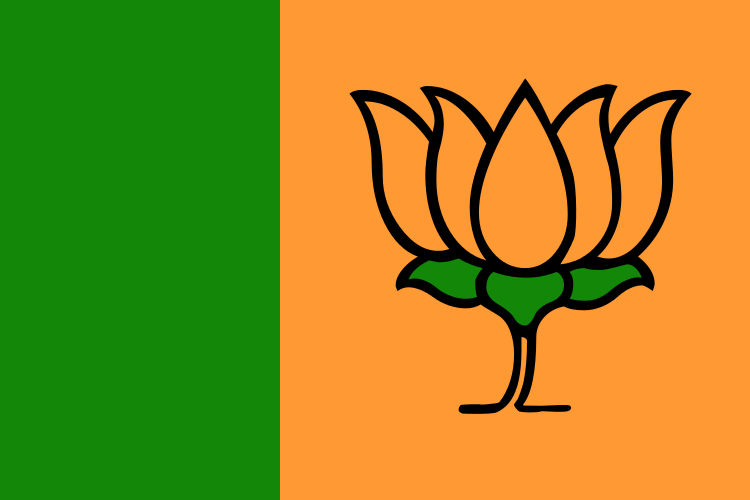

Rajnath Singh(www.infodhooth.blogspot.in)


5.Bahujan Samaj Party:

Founded          – 1984 by Kanshi Ram.
Head Quarters – 12, Gurudwara, Rakabganj Road, New Delhi.
Mayawati(www.infodhooth.blogspot.in)


6.Nationalist Congress Party:

Founded          – 25th May 1999 by Sharad Pawar.
Head Quarters -10, Bishambhar Das Marg, New Delhi.


Sharad Pawar(www.infodhooth.blogspot.in)


                                                                            authors: 1. Chakradhar.G
                                                                                          2. Uday Shankar.B
                                                                    source: internet


Tuesday, April 08, 2014

SBI PO EXAM PREPARATION STRATEGY WITH COMPLETE ANALSYS ON EACH TOPIC

SBI PO EXAM PREPARATION STRATEGY WITH COMPLETE ANALSYS ON EACH TOPIC


Author of this article cleared all the four IBPS exams conducted in 2013
IBPS-RRB's Scale I officer with 135 marks
IBPS-RRB's  office assistant (multipurpose) with 130 marks
IBPS-PO/MT III with 93 marks
IBPS-CLERKS with 155 marks

and made his final selection as a PO in BANK OF BARODA

for any doubts can post ur doubts here in coments section 
>>admin                                                                                                                
                                                                                                 author: sarat chandra .m


SBI PO EXAM STRATEGY

Exam strategy:

                   Descriptive papers of each and every candidate won’t be evaluated.First,the objective performances are screened and a cut-off is fixed.Then,the descriptive booklets of those candidates whose performance in objective is more than the cut-off are evaluated. Then the cut-off for descriptive is fixed. Then, after eliminating those who cleared objective cut-off but failed to clear descriptive cut-off and then a combined cut-off of both objective and descriptive is arrived at. Remember that the combined cut-off is greater than the sum of cut-off in descriptive and the cut-off in objective (suppose the objective cut-off is 100/200 and the descriptive cut-off is 20/50 then the total cut-off out of 250 would definitely be greater than 120)


These were last year cut-offs.
Writing a descriptive paper after working out a total of 200 bits without a gap in between is not easy. Also you can’t get 50/50 in descriptive .My advice is to clear the objective with a very good score (say 130+) and just try to get passing marks in descriptive (>20).

Happy reading folks!!! All the best!!!


IBPS-RRB's Scale I officer with 135 marks
IBPS-RRB's  office assistant (multipurpose) with 130 marks
IBPS-PO/MT III with 93 marks
IBPS-CLERKS with 155 marks

and made his final selection as a PO in BANK OF BARODA
for any doubts can post ur doubts here in comments section


>>admin                                                                                                                
                         
                                                                                           author : sarat chandra.m
                                                                                      co author  : uday shankar.b

SBI DESCRIPTIVE PAPER APPROACH

Descriptive:

                  Descriptive consists of 5 topics and you have to answer a question on each and every topic within an hour. Descriptive paper is for 50 marks.

The topics in descriptive include:
  
  Ø  Letter writing
  Ø  Short essay
  Ø  Comprehension
  Ø  Precis writing
  Ø  Long essay

Letter writing:

                   In letter writing, two questions will be asked and we need to answer any one of them. One formal letter and one informal letter will be given generally. Formal letters are those kinds of official letters which are written to professionals like bank managers. Analysis suggests that most questions on formal letters in SBI PO are like “write a letter to your manager for 3 days leave”/”
write a letter about your missing credit card to your branch manager”. Informal letters are those
kinds of letters which we write commonly to our parents/friends.

                   To write a letter first you must know the basic skeleton of the letter. Like where to put the commas and full stops and where to put the appropriate salutations etc. These are the things that evaluators observe while evaluating.

                   Remember that you've to write the British format, not the American format. You can Google it to get an idea.

                   Learn how to write both kind of letters but my personal suggestion is to prefer formal letter. Letter writing carries 10 marks.

Short essay (150 words limit):

                   You’ll be given three topics and you have to write an essay on any one of them in not more than 150 words.

                   For the same, you've to read a lot of articles on general and contemporary issues to get different ideas and you need to also have an idea of how to present those ideas in the passage.
Any essay must have 3 basic things:
1.Introduction
                -> In the introduction you've to explain the definition of the topic.
2.Body
                -> The body must be in 3 paragraphs. In 2 paragraphs write about the positive aspects of the topic and in the next paragraph, write about the negative aspects of the topic, if the topic is appositive one like globalization, automation. It must be the other way around if the topic is a negative one like terrorism, corruption.
3.Conclusion
                -> In the last paragraph conclude it in a proper way.
So a proper essay will have 5 paragraphs. This question carries 10 marks.

Comprehension:

                  You've been doing this since your elementary school days. You’ll be given a passage followed by 5 questions. You've to read the passage and write down the answer for each question.
My advice is to first read the questions and while reading the passage underline the answers with a pencil and write the answer then itself. Each question carries 2 marks, so 5 questions carry 10 marks.

Precis writing:

                  Precis writing actually means summarizing. Here a passage will be given and you’ll be asked to summarize it within a word limit. All you have to do is underline the key points while reading the paragraph and write them down in a simpler version which can be understood by everyone.
This section carries 10 marks.

Long essay (250 word limits):

                  Same as short essay. Just the wording limit is increased here. This section carries 10 marks.

COMPUTERS,MARKETING APTITUDE & GENERAL AWARENES

Computers, Marketing Aptitude and General Awareness:

                       The easiest and the scoring section in the exam.
->For computers, just know the basics. For an idea refer to previous questions as most of them would be repeated.
->For marketing aptitude, you have many booklets available in the market at a very low price. Those booklets are more than enough.
->For general awareness, you have to read newspapers and make a note of important points. Most probably they might ask questions from the previous 6 months. General awareness also covers banking awareness. So, be updated with the same by reading all the basic banking terminology and latest developments in banking sector.

That winds up 200 questions of objective paper. As soon as the timer in your computer expires, it marks the end of your objective test and you will be given a booklet with questions and space for answers. You’ll be asked to fill in your roll number before starting the exam. Let us see what topics are covered in descriptive.

QUANTITATIVE APTITUDE APPROACH

Quantitative aptitude:

Data Interpretation:

                  Data interpretation(DI) will be asked for 15-20 marks. But it is a bit time consuming. You have to practice atleast 400+DI questions until the exam. For doing so, you've to practice 4 sets (each set has 5 questions) of DI every day and make sure that those 20 questions are solved inside 30mins.

Number Series:

                  Previously asked in reasoning now number series is being asked in aptitude. You know the drill, a series of numbers will be given with a missing number, and you've to find the missing number.
Sometimes a full series will be given and you might be asked to spot the number that doesn't belong to the series. Usually asked for 5 marks.

Other topics can be prepared with the questions asked in previous question papers in mind.

ENGLISH LANGUAGE APPROACH

English language:

                     The nightmare section which makes the difference between getting selected for the job/not qualified in written part itself. But remember, if you prepare for this section properly, you’ll
not only qualify for it, but you will also be practicing a basic thing for interview, sentence formation. Preparing for this section will help for both written and interview. Before actually practicing this section, you have to actually master Basic English grammar.

Now let’s see the most repeated sections in English.


Cloze test:
                     Here a passage will be given with blanks in the middle. You have to choose the appropriate word that fills the blank. People who have reading habit can score 9-10 marks easily. Those who don’t have to read newspapers (English, not your local language) a lot, particularly the editorial section. Usually asked for 10 marks.

Fill in the blanks:
                     Here, you will be given a sentence with one/two blanks. You have to fill in the correct phrase. Sometimes, two sentences with a single blank will be given. The answer fits in both the statements. You have to choose that one accurate phrase. Usually asked for 5 marks.


Common error correction:
                     Here, you will be given a statement which is divided into 5 parts. You have to choose the part which is grammatically inaccurate. Master English grammar and you can score well in this topic.
Usually asked for 5 marks.

Comprehension:
                     A passage will be given followed by 10-15 questions. You have to tick the correct answers for the questions. Usually the passage will be very big and consumes lot of time to read. My advice would be to skip this section if time doesn't permit or your reading speed is low.
You can expect either 10 or 15 marks on this topic.

Jumbled sentences:
                     5-7 sentences will be jumbled. You have to place them in their correct order of appearance and answer the questions. Usually asked for 5 marks.

Other topics can be viewed form previous question papers but these are almost definite to be asked.

REASONING APPROACH

Reasoning:

                 Seeing last year’s papers, anyone can guess that this is the most time killing section. But nothing to worry. Let’s see some topics which are easy and scoring.

Inequalities:
                 In this section, you will be given one or two statements with a series of inequality relations (like A>B<C=D) and two conclusions. All you have to do is phase out if the conclusions are true/false/can’t be determined. Sometimes they give a series of codes for the symbols like A#B means A is neither greater than nor equal to B (which implies A<B); A$B means A is not less than B (which implies that A is greater than or equal to B).The bracket part won’t be given in the question paper, you have to phase it out yourselves.  Then there will be one or two statements in coded form like A$B#C which has to be decoded into a proper mathematical relation by you. The conclusions will also be given in coded form. They also have to be decoded and then have to be compared with the decoded statements to see if they are true/false.
                Sometimes they miss a single relation in a statement and give a particular relation which must be definitely true or false. You have to phase out the missing relation. (A>B-----C A>C is definitely true which means A>B>C is our answer)
Generally they give this section for 5 marks. You can grab these 5 marks very easily.

Syllogisms:
                In this section, two or 3 statements will be given like All A are B, Some B are C. Two or three conclusions will be given like some A are B.Some B are C. You have to find out which conclusion’s true and which one’s false. For basic rules of solving this section, Google the term ‘syllogism basics’ and browse through the different techniques. Stick to the technique which you find easy. Another 5 marks grabbed easily.

Blood relations:
                You know the drill. A series of complex indirect relations between two persons will be given. You have to phase out the actual relation between the two. (If this is not asked as an individual question, it can also be asked in puzzle/seating arrangement). Sometimes, they give coded relations like A$B means A is the mother of B,A%B means A is the father of B.They give a statement like P$Q%R.How is P related to R.You have to decode the statement and answer it likewise).

Directions:
                Not a very important topic but why take our chances. Simpletopic. The travelling pattern of a person/object will be given and you might be asked to find out the final direction the person/object is facing.Some times questions can also include distances.

Now let us see some moderate sections in reasoning.

Machine input –output:
                 In these types of questions, an input will be given and it will be sorted in usually 5-8 steps. Every step will be given.

Example:
Input -   man’s mood varies with time and environment
Step-1   varies with man’s mood environment and time
Step-2   and time environment mood man’s varies with
Step-3   environment time and varies with mood man’s
Step-4   and varies environment time man’s mood with

                This will be followed by another input and 5 questions. You have to note down the input, sort out the logic of the given steps, apply the same to the given input and write down the steps. Then you can answer the 5 questions easily.
The input may not only include words, it may sometimes include a combination of numbers, special characters and words. This section can kill your time so practice it well. If you think you can’t do it, don’t go for it.

Puzzle/Seating arrangement:
                 You will be given a series of steps for a particular arrangement. You have to read the steps and make the arrangement accordingly. Simple? No.Because arrangement of every object won’t be given. You have to use logic to phase out the entire arrangement. Sometimes only 1 puzzle/seating arrangement will be given. Sometimes both will be given.SO expect a minimum of 5 marks and a maximum of 10 marks from this section.

Verbal reasoning:
                 This section can be classified as between moderate and difficult. You will be given a question and conclusions/inferences/course of actions follow.If you read the question properly, you can phase out the answers.

Non-verbal reasoning:
                 This can be the most scoring and the most time killing part in reasoning. A definite section in SBI PO. You will be given a series of four pictures and you need to sort out the 5th one.
Sometimes 5 pictures will be given and you have to choose the one that doesn’t belong to the series (Odd man out) Sometimes an analogy question can also be asked (Like A:B, find out C :?)
Usually asked for 10 marks.

Other topics can be studied from previous papers, but these are the least expected questions.

SBI PO NOTIFICATION DETAILS & EXAM PATTERN

SBI PO NOTIFICATION DETAILS & EXAM PATTERN

Hello my friends and bank job aspirants!!!Hope everything is going well.

On 5th April, 2014 State Bank of India has released a notification for recruitment of 1837 probationary officers. For all the details regarding important dates, application fee details, logon to http://www.sbi.co.in/user.html and click on download advertisement. The major change this year is that unlike the previous SBI PO examinations which were conducted offline, this year the objective paper would be conducted ONLINE.

Now before going into the details of the exam, the syllabus and tips for preparation, I want to tell you about the competition. Last year when SBI had released the notification of 1537 probationary officers, it had received 17lakh applications. Even IBPS exams don’t have this amount of competition. But I am not telling this to bring down your spirits. What’s the challenge when you get something easily!
Coming to the exam pattern, SBI PO exam has two parts:

Ø  Objective

Ø  Descriptive

In objective just like IBPS PO, SBI PO has 200 questions which need to be solved in 2hours.But the difference between IBPS PO and SBI PO is that IBPS has 5 sections.

Sr.
No.
Name of Tests (Objective)
Number of questions
Maximum
Marks
Duration
1
Reasoning
40
50
Composite Time of 2 hours
2
English Language
40
40
3
Quantitative Aptitude
40
50
4
General Awareness (with special reference to Banking Industry)
40
40
5
Computer Knowledge
40
20
Total
200
200

This was the pattern of IBPS PO III

Coming to SBI PO, it has only 4 sections.

Sr.
No.
Name of Tests (Objective)
Number of questions
Maximum
Marks
1
Reasoning
50
50
2
English Language
50
50
3
Quantitative Aptitude
50
50
4
General Awareness, MarketingAptitude, Computer Knowledge
50
50

Total
200
200

This is the normal pattern followed by SBI in every PO exam.

Now let’s break down each section and see what the scoring sections are.